
Director of the Sales Department of the Russian Federation and the CIS
Choosing a site for constructing a solar power plant is not just about the availability of free land. The efficiency of power generation directly depends on the region’s solar insolation level, which can vary several times across Russia. Understanding the insolation map helps forecast project payback periods.
Annual electricity tariff increases are accompanied by a steady decline in solar equipment prices. In recent years, this has led to a situation where building solar power stations in Russia is a profitable investment for industrial enterprises and large businesses.
What is insolation and why is it important for PV plants?
Solar insolation refers to the amount of solar energy reaching the Earth's surface over a specific period. This parameter is measured in kilowatt-hours per square meter per year (kWh/m²) and determines the potential output of a solar station. The insolation level directly influences the annual energy production.
Factors affecting insolation include
- Latitude: Closer to the equator, the higher the sun’s angle of incidence and the greater the energy received.
- Climate features: Low cloud cover and fewer cloudy days significantly increase the annual insolation.
- Season: In winter, insolation in Russia can be 5-6 times lower than in summer due to the low position of the sun.
Thus, identical capacity panels in southern regions can produce 1.5-2 times more electricity than in northern latitudes. This directly impacts the project’s payback period and economic efficiency.
It’s important to note that modern photovoltaic modules can operate even in cloudy weather by absorbing diffuse light. However, project calculations are always based on the average annual insolation data for a specific area. Engineers analyze multi-year data to accurately forecast energy output and payback.
Insolation Map of Russia: Where Are the Sunniest Regions?
Southern Regions: Leaders in Solar Potential
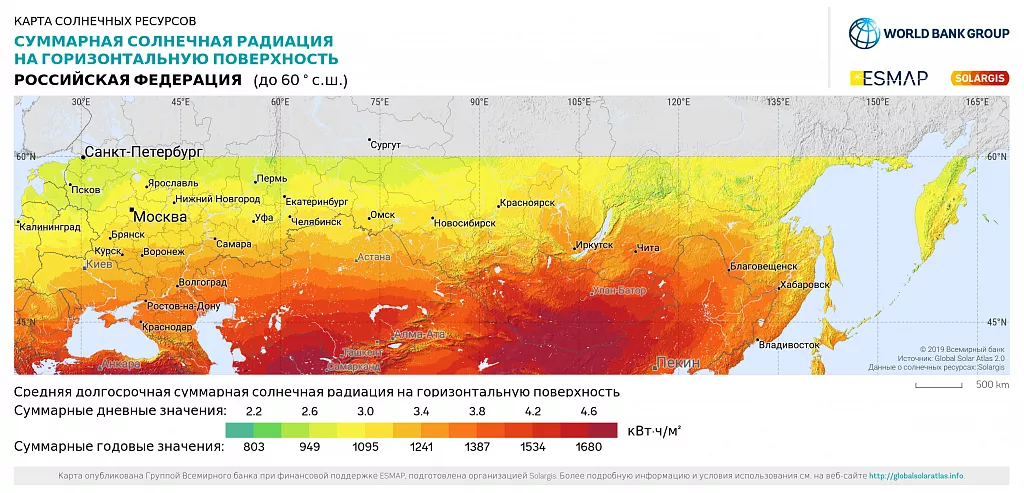
The highest insolation rates are found in the southern parts of the country. Krasnodar Krai, Rostov Oblast, and the North Caucasus republics receive between 1300 and 1500 kWh/m² annually. Here, solar energy demonstrates maximum efficiency thanks to low latitude, numerous sunny days, and favorable temperatures.
In Krasnodar, annual insolation reaches 1340 kWh/m², enabling a 1 MW plant to produce up to 1.4 million kWh of electricity annually. For a high-consumption industrial enterprise, this significantly reduces energy costs. Well-developed regional infrastructure simplifies construction and grid connection, further reducing capital expenses.
The North Caucasus republics—Daghestan, Chechnya, and Ingushetia—show even higher results. Makhachkala holds the record among large Russian cities with 1450 kWh/m² per year. Clean mountain air and minimal cloud cover create ideal conditions for photovoltaic systems.
Siberia and Zabaykalsky Krai
Thanks to their continental climate with many clear days, these regions receive 1200–1400 kWh/m² annually. Notably, southern Irkutsk region and Zabaykalsky Krai stand out.
This is evident on the map, where some regions of eastern Yakutia receive 30-40% more sunlight per year than St. Petersburg or Norilsk at the same latitude. The secret is the climate: clear skies compensate for northern positioning. For example, Irkutsk surpasses many European cities in Russia.
Buryatia, Tuva, and Zabaykalsky Krai are especially promising for mining industry projects. Their remoteness from centralized grids makes diesel generation the primary energy source.
Caucasus
Mountainous regions of the Caucasus receive high insolation—up to 1450 kWh/m² per year. Daghestan, Chechnya, and Stavropol Krai are among the most promising areas for PV plant construction. Clear mountain air and minimal cloud cover create favorable conditions for energy production.
Stavropol Krai actively develops solar energy, combining excellent insolation with a robust agro-industrial complex that requires stable, affordable energy. Solar carports and warehouses are becoming popular solutions, efficiently utilizing existing spaces.
Volga Region
Volgograd, Astrakhan regions, and Kalmykia combine good insolation with developed infrastructure, reducing construction and connection costs.
Astrakhan shows some of the best results in European Russia. The region, traditionally strong in oil and gas, increasingly considers solar generation as part of its sustainable development strategy. This helps reduce carbon footprint and meet international ESG standards (Environmental, Social, Governance).
Regional Climate Zone Differences
Federal Districts
South and North Caucasus: Makhachkala reaches 1.35 MWh/m², Astrakhan 1.38 MWh/m², Rostov-on-Don 1.29 MWh/m².
Caspian coast: Faces dust storms — dust layers 0.5 mm thick over two weeks can reduce panel efficiency by 50%. Solution — automatic pressure washing systems (up to 2 atmospheres).
Central and Volga Districts: (1.01–1.26 MWh/m²) Moscow: 1.01 MWh/m², Omsk: 1.26 MWh/m².
Engineers recommend two stationary systems — one with a winter tilt of 60°, another with a summer tilt of 20°, or tracking systems.
Ural and Siberian Districts: Yekaterinburg: 1.1 MWh/m², Novosibirsk: 1.14 MWh/m² .
Continentally influenced climate with many clear days compensates for the northern location.
Northwest District: St. Petersburg: 0.93 MWh/m², Arkhangelsk: 0.85 MWh/m², Kaliningrad: 0.95 MWh/m² — has a stable maritime climate, making systems more predictable than in continental regions with sharp seasonal variations.
Urban Insolation
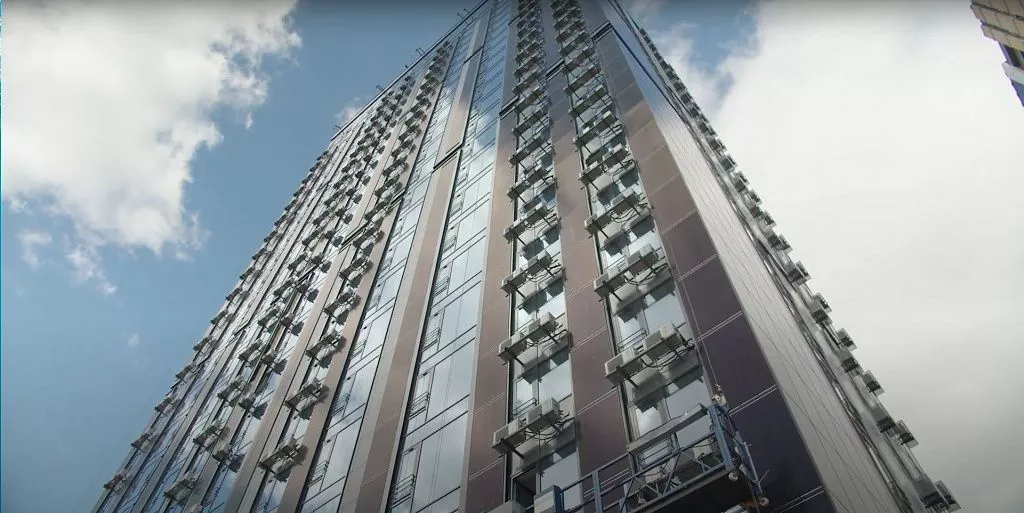
Moscow (1.01 MWh/m²): High electricity prices make facade-mounted PV systems attractive for business centers and high-rises, generating energy without requiring land.
Yekaterinburg (1.1 MWh/m²): The continental climate provides more sunny days than Moscow. Industrial enterprises use hybrid solutions, where summer stations cover a significant part of daily consumption.
Ufa (average insolation 3.70 kWh/m²·day): Leader in the Volga Region with pronounced seasonality. Summer months (June: 5.76; July: 5.74 kWh/m²·day) generate 3.5 times more energy than winter months (December: 1.63; January: 1.67 kWh/m²·day). Optimal tilt angle: 43.9°.
What factors influence PV plant placement?
Climate
Many underestimate this—modern silicon cells lose about 0.5% efficiency per degree above 25°C. Regions with moderate summer temperatures sometimes outperform hotter southern areas.
Snow cover must be considered during design. Snow usually slides off inclined surfaces but steeper tilt angles or automated cleaning systems are recommended in snowy regions.
Latitude and tilt angle
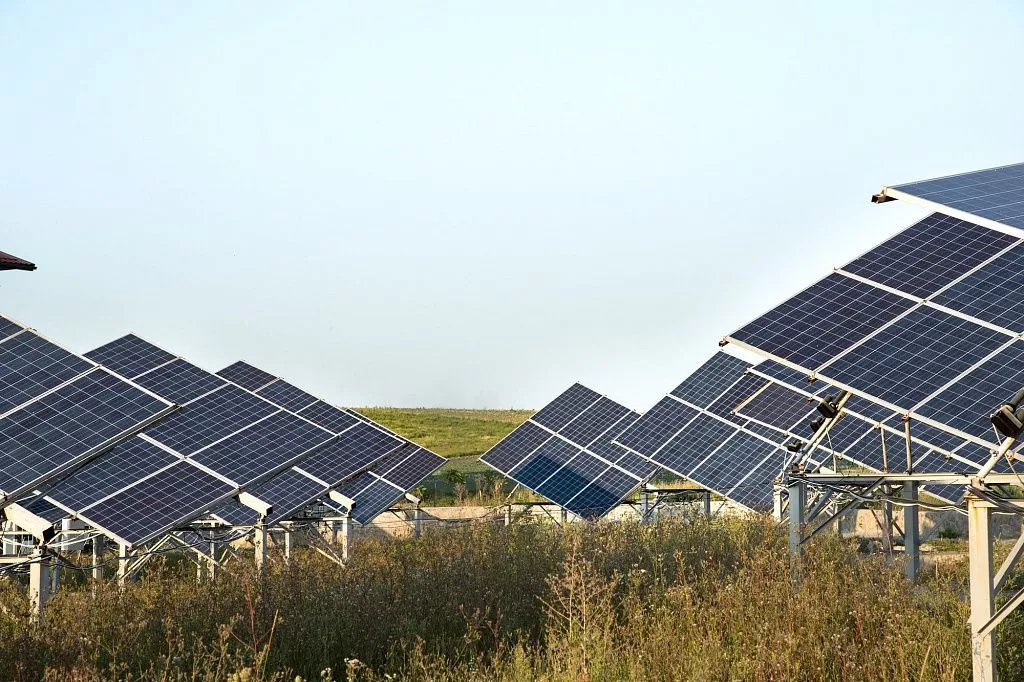
Typically, panels are installed at an angle close to the latitude for maximum annual yield. However, Unigreen Energy uses tracking systems that follow the sun automatically, increasing energy production by 20–25% compared to stationary arrays.
Seasonality
In winter, insolation is five times lower than in summer. Projects are designed with a margin to ensure winter generation.
Relief and shading
Mountains, trees, and buildings create shadows that reduce efficiency. Engineers model the sun’s trajectory to identify shading zones. Modern projects use power optimizers, allowing each panel to operate independently.
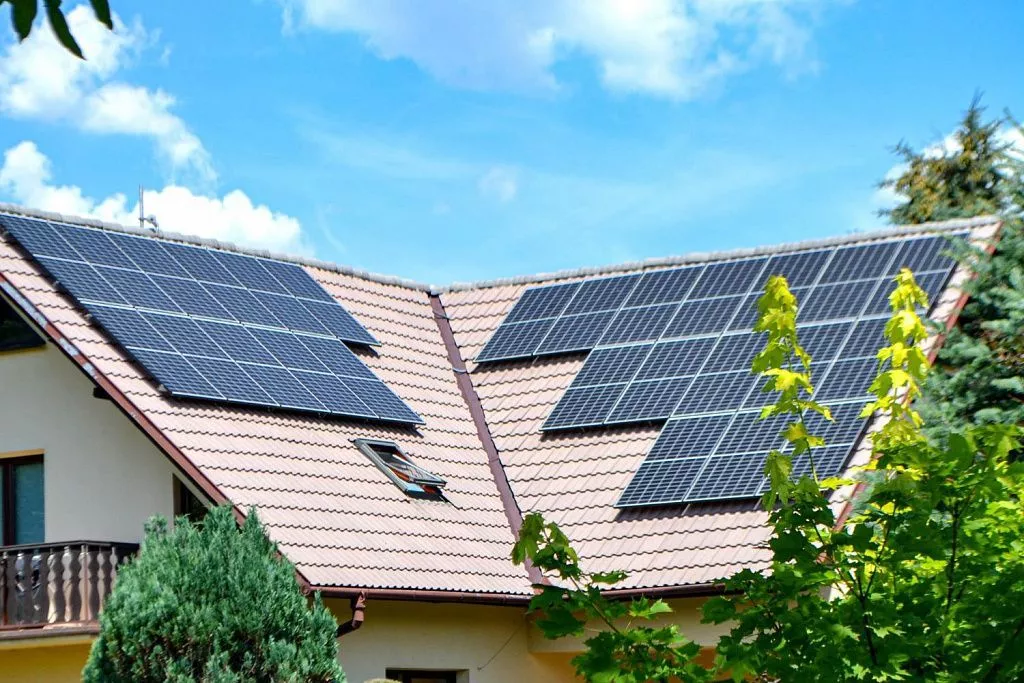
For industrial facilities, rooftop PV systems are optimal, utilizing large unused roof areas. Facade-mounted systems are mainly used in dense urban environments for aesthetic reasons. Solar canopies can be integrated into existing structures without land allocation.
Economic and infrastructural factors
Proximity to consumption points reduces transmission losses and simplifies integration. For large industrial plants, placing stations on rooftops or near production facilities is ideal.
Grid access is critical for grid-connected stations. Proximity to transmission lines reduces connection costs, which can be significant. Remote sites often favor autonomous or hybrid systems.
Logistics accessibility impacts construction costs. Access roads are crucial for delivering large equipment for plants over 1 MW.
Regional electricity prices influence potential savings. In remote areas with high diesel costs (25–50 rubles/kWh), solar stations can pay off within 1–2 years. In regions with cheap hydroelectric power (2–3 rubles/kWh), payback extends to 7–10 years, but projects remain attractive from a long-term perspective.
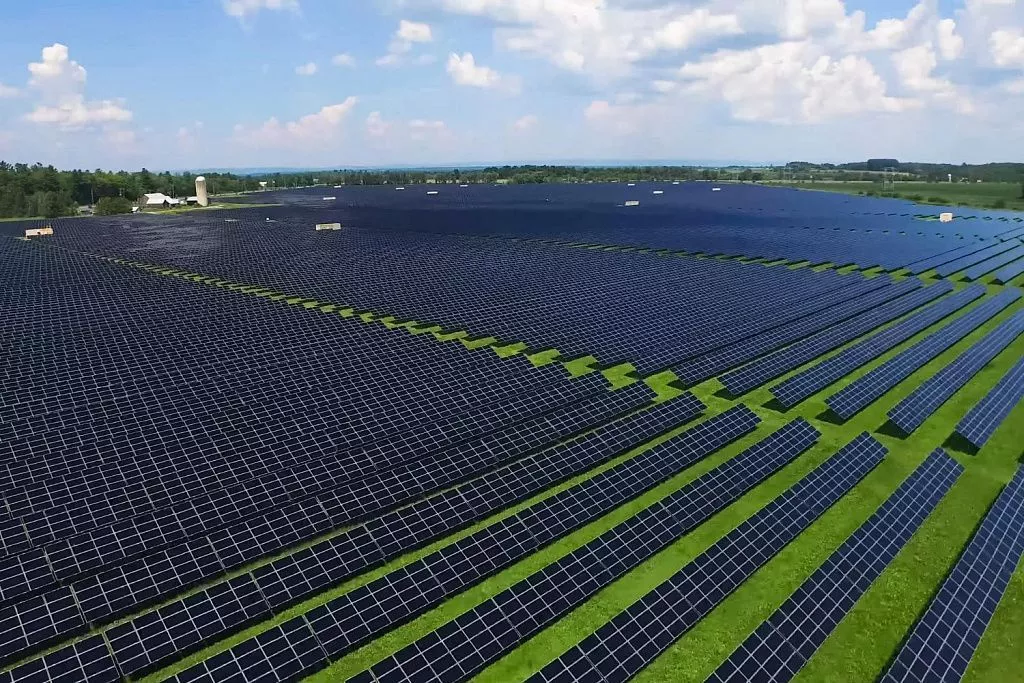
Land resources and their cost also matter: southern regions have higher land costs, but higher yields compensate. We use non-arable land unsuitable for agriculture or integrate panels into existing structures.
Solar Energy in Russia Today
The Russian solar generation market is actively growing. Industrial companies increasingly see solar energy as a reliable and predictable power source. Projects are especially relevant for energy-intensive sectors: metallurgy, petrochemicals, mining, and food processing. Implementing renewables helps reduce operational costs and meet international sustainability standards.
Russia has over 70 large solar power plants built with domestic technology and equipment. Major facilities are located in high-insolation regions: Kalmykia (Arshan Solar Power Plant, 115.6 MW), Crimea (Perovo Solar Plant, 105.58 MW), and Stavropol Krai. These plants demonstrate the technical and economic viability of solar in Russia’s climate.
A breakthrough event was the signing of an agreement for Russia’s largest solar plant in Amur Region, with a capacity of 650 MW, scheduled to start in 2026 and commissioned by late 2027. The plant will produce 1 billion kWh annually and will play a key role in overcoming energy shortages in the Far East, where consumption grows 2–3 times faster than the national average.
Trends and Outlook
Perovskite solar cells—an innovative development with 30–35% efficiency and the ability to be applied on flexible substrates—are transforming facades, windows, and roofs. BIPV (building-integrated photovoltaics) turn buildings into power generators, which is especially relevant for urban development. Hybrid systems in Siberia and the Far East reduce diesel consumption by 30–50%, with payback in 1–2 years. AI-driven digitalization forecasts energy output with 95% accuracy, enabling optimal management of enterprise energy balances.
Experts predict that by 2035, solar energy could account for 5% of Russia’s energy mix (~10 GW). The government’s strategic goal is to add another 2.4 GW of solar capacity between 2023 and 2035.
Director of the Sales Department of the Russian Federation and the CIS