Submit a request

Design of solar power plants

Engineering design of solar power plants, featuring energy efficiency calculations, financial modeling, and comprehensive lifecycle analysis.
Design of solar power plants

A project that pays back the investment
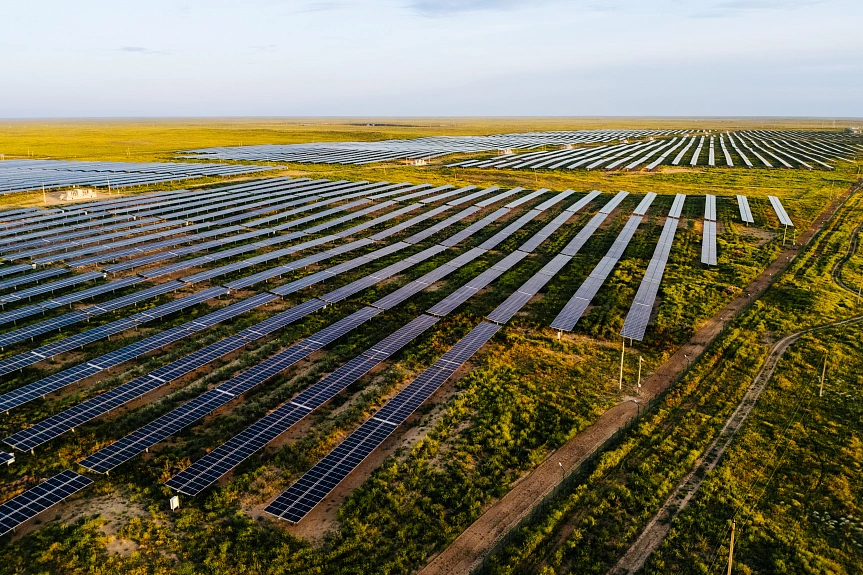
We design solar power plants for industrial enterprises, developers, and infrastructure facilities. Each solar power plant project is a thorough engineering calculation that accounts for site insolation, the facility's energy consumption profile, and grid operator requirements.
A project that pays back the investment
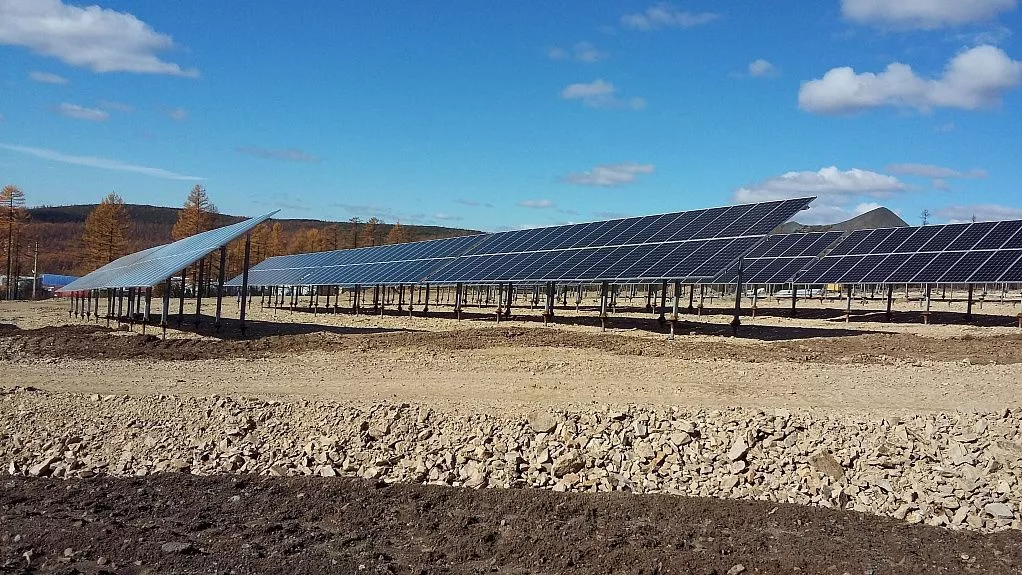

Engineering precision
as the foundation of
profitable investments

Technological Expertise

When selecting equipment, our engineers rely on advanced heterojunction technology (HJT) due to its higher efficiency, minimal temperature coefficient, low degradation rate, and maximum performance under low insolation and diffused light conditions. This directly increases the annual power generation of the solar power plant (SPP).

Investment Accuracy

SPP design begins with modeling the prospective facility and calculating performance metrics using a physical-mathematical model. This includes electricity generation forecasting based on international standards and financial institution requirements. We calculate key financial metrics: Levelized Cost of Electricity (LCOE), Net Present Value (NPV), and Internal Rate of Return (IRR) of the solar power plant project. This allows investors to evaluate actual project economics prior to the EPC/construction stage and eliminate risks associated with inaccurate generation forecasts.

Custom Engineering Approach

Every project is tailored to the Customer's specific goals (e.g., the facility's load profile and/or site characteristics). We design the optimal system architecture, placement layout, mounting structure type (fixed-tilt or solar trackers), evaluating wind and snow loads on structural supports, and model the electrical operating modes and energy parameters of the future solar plant. There are no standardized SPP projects—only engineered, site-specific solutions.

Grid Reliability and Integration

Engineering documentation includes the design of protection systems, automation, and parallel operation of the SPP with the local grid infrastructure (including export control systems where required). This ensures stable, efficient operation and guarantees equipment safety.

Feasibility Stage Risk Management

Designing grid-tied, off-grid, and hybrid SPPs allows technical constraints and risks to be identified at the pre-project stage through grid connection terms analysis, connection point audits, and land plot assessments. We eliminate these uncertainties prior to project execution, protecting the Customer's budget.

Scalability and Modernization

A well-engineered solar plant design accounts for future business expansion. We incorporate a modular architecture and sufficient reserve capacity within key cabling and grid infrastructure. This enables cost-effective capacity expansion in the future.

Start with an accurate calculation

Discover your transition potential to clean energy with Unigreen Energy engineers.
Submit a request for a project calculation

Designing plants of different types

Grid-Tied Solar Power Plants

Grid-Tied Solar Power Plants

Designed to operate in parallel with the external power grid without energy storage systems. Generated electricity offsets on-site consumption, reducing grid energy costs. Any excess power is fed into the grid or limited by an active power control system if required by the Grid Connection Terms.

Engineering Challenge: Analyze the facility's hourly load profile, select the optimal grid inverter configuration, and determine the exact SPP capacity needed to maximize self-consumption. Ideal for facilities with high daytime demand, ranging from commercial centers to large industrial enterprises.

Hybrid Solar Power Plants

Hybrid Solar Power Plants

Designed for grid-connected facilities facing unreliable power supply or capacity constraints. These systems combine grid-tied and off-grid functionalities: they operate in parallel with the grid while featuring an Energy Storage System (ESS) for backup power and load management.

Engineering Challenge: Optimize energy flow control algorithms. The solar plant design includes automatic backup algorithms for critical loads during grid outages, active peak shaving under utility restrictions, and maximum offset of grid power consumption. Ideal for continuous-process industries where power interruptions are critical.

Off-Grid Solar Power Plants

Off-Grid Solar Power Plants

Designed for remote sites lacking centralized power grid access. Operating as standalone hybrid power systems, they deliver reliable off-grid power by integrating renewable energy sources (PV modules, wind turbines), energy storage systems (ESS), and backup generation (diesel or gas gensets).

Engineering Challenge: Calculate daily and seasonal load profiles for precise battery capacity and genset power sizing. The primary design objective is to ensure reliable off-grid power or maximize the fuel displacement ratio (diesel fuel savings) while maintaining required power reliability. For remote industrial sites and field camps, solar power plants can be supplied as mobile containerized solutions.

Station Connection Options

Industries of Application

We engineer SPP projects tailored to the operational requirements of industrial, mining, and commercial enterprises. We integrate solar generation into existing infrastructure or build off-grid energy systems from scratch for remote sites lacking grid access and temporary facilities at early development stages.
Mining and Industrial Companies
Real Estate Developers and Investors
Agriculture and Agribusiness
Telecommunications and Communications
Hospitality and Tourism
Transport Infrastructure
Urban Infrastructure
Hybrid Energy Solutions

Didn't find your industry?

Contact us and we will prepare a project for your needs
Send a request

How the design process works

Requirement Definition and Goal Alignment

We collect and analyze site parameters: climatic conditions, regional insolation, site specifics, and the facility's electrical load profile. We also review grid connection technical conditions.

Feasibility Study and Financial Modeling

By modeling various SPP configurations and operational scenarios, we determine optimal plant parameters, evaluate CAPEX/OPEX, and calculate LCOE, IRR, and payback periods within the feasibility study.

Comprehensive Engineering Surveys

We perform geotechnical, geological, and hydrometeorological site surveys to evaluate terrain and soil conditions, which are critical for site layout design and foundation/mounting system selection.

Basic Engineering Solutions (BES) and Equipment Selection

We develop BES and select key equipment tailored to project requirements: PV module technology (including high-efficiency HJT modules), inverters, mounting structures (fixed-tilt or solar tracking systems), switchgear, and auxiliary monitoring and communication equipment.

Detailed Engineering Documentation

We prepare primary design documentation in strict compliance with applicable regulatory standards. This stage includes site plans, single-line and schematic diagrams, cable selection, and protection/automation calculations for grid compatibility.

Permitting and Regulatory Approvals

We assist throughout regulatory reviews, coordinating technical decisions with grid operators and facilitating state or third-party expert reviews of the design documentation.

Working Documentation

Following regulatory approval, we finalize detailed working documentation, cable schedules, and precise equipment/material specifications required for construction and installation works (EPC).

Construction Supervision

Our engineers oversee construction quality, providing technical supervision during installation, site assembly, and commissioning to ensure building alignment with approved design documentation.
Solar module products
Solar module 144 cells M10 MBB
  • Linear performance guarantee 30
  • Warranty for the module 15
  • Rated power 540-560 WT
  • Efficiency 25.7%
  • Operating temperature –40 до +85°C
  • Configuration ‘glass-glass’ technology
  • Dimensions, mm 1135×2256×35
Solar module 144 cells M6 MBB
  • Linear performance guarantee 30
  • Warranty for the module 15
  • Rated power 440-455 WT
  • Efficiency 24.6%
  • Operating temperature –40 до +85°C
  • Configuration ‘glass-glass’ technology
  • Dimensions, mm 1051×2134×35
Solar module 66 cells M2+
  • Linear performance guarantee 30
  • Warranty for the module 15
  • Rated power 355-370 WT
  • Efficiency 23.5%
  • Operating temperature –40 до +85°C
  • Configuration ‘glass-glass’ technology
  • Dimensions, mm 1852×997×35
Frequently Asked Questions About Solar Power Plant Engineering
What does solar power plant engineering include?

The full cycle includes feasibility studies, financial modeling, equipment selection, and the preparation of design and working documentation required for regulatory approvals and construction.

What types of facilities do you design for?

We design plants for industrial facilities, commercial and residential real estate, infrastructure assets, and remote locations—ranging from small grid-tied setups to utility-scale hybrid energy systems.

Is there a minimum plant capacity you work with?

We handle projects of all scales, from local off-grid systems to utility-scale grid-tied plants, with no strict minimum capacity limits.

What data is required from the client to initiate design?

We require basic site information, consumption load profiles, grid connection technical conditions (if applicable), and project objectives (e.g., cost reduction, backup power, or full autonomy).

How long does the design process take?

Timelines depend on project scale and complexity, ranging from a few weeks for standard grid-tied solutions to several months for complex hybrid systems requiring custom calculations.

Can future capacity expansion options be included in the design?

Yes, we incorporate scalability into our initial designs by reserving capacity in electrical infrastructure and identifying space for additional PV modules.

Does Unigreen Energy offer turn-key solutions or engineering only?

We support projects through every phase—from engineering documentation and construction to installation and technical supervision—delivering complete turn-key solutions.

Do you assist with project financing?

We advise on financing models and help structure investment justifications for presentation to financial institutions and partners.

What factors influence the total engineering cost?

Costs depend on plant capacity, system type (grid-tied, off-grid, or hybrid), electrical scheme complexity, and the required scope of site surveys and regulatory approvals.

Other solutions

Utility-scale SPPs
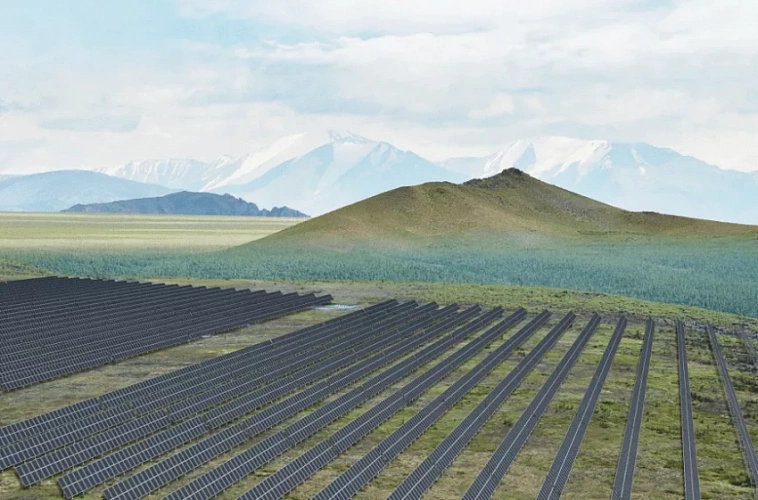
Utility-scale SPPs

Provide your business with green energy with energy-efficient grid-connected solar installations that produce electricity steadily even in cloudy weather and help to fix electricity costs, protecting against rising tariffs and unpredictable price spikes
Explore
Hybrid Solar Power Plants

Hybrid Solar Power Plants

Energy independence without compromise — during grid outages, high tariffs, or in the absence of power lines.
Explore