
Director of the Sales Department of the Russian Federation and the CIS
Static panels cannot operate at 100% 24/7 because the sun's position changes constantly throughout the day. The thing is, the sun rises in the east, passes the zenith, and sets in the west, while solar panels face one direction all daylight hours. A panel operates at full capacity for only a few hours a day.
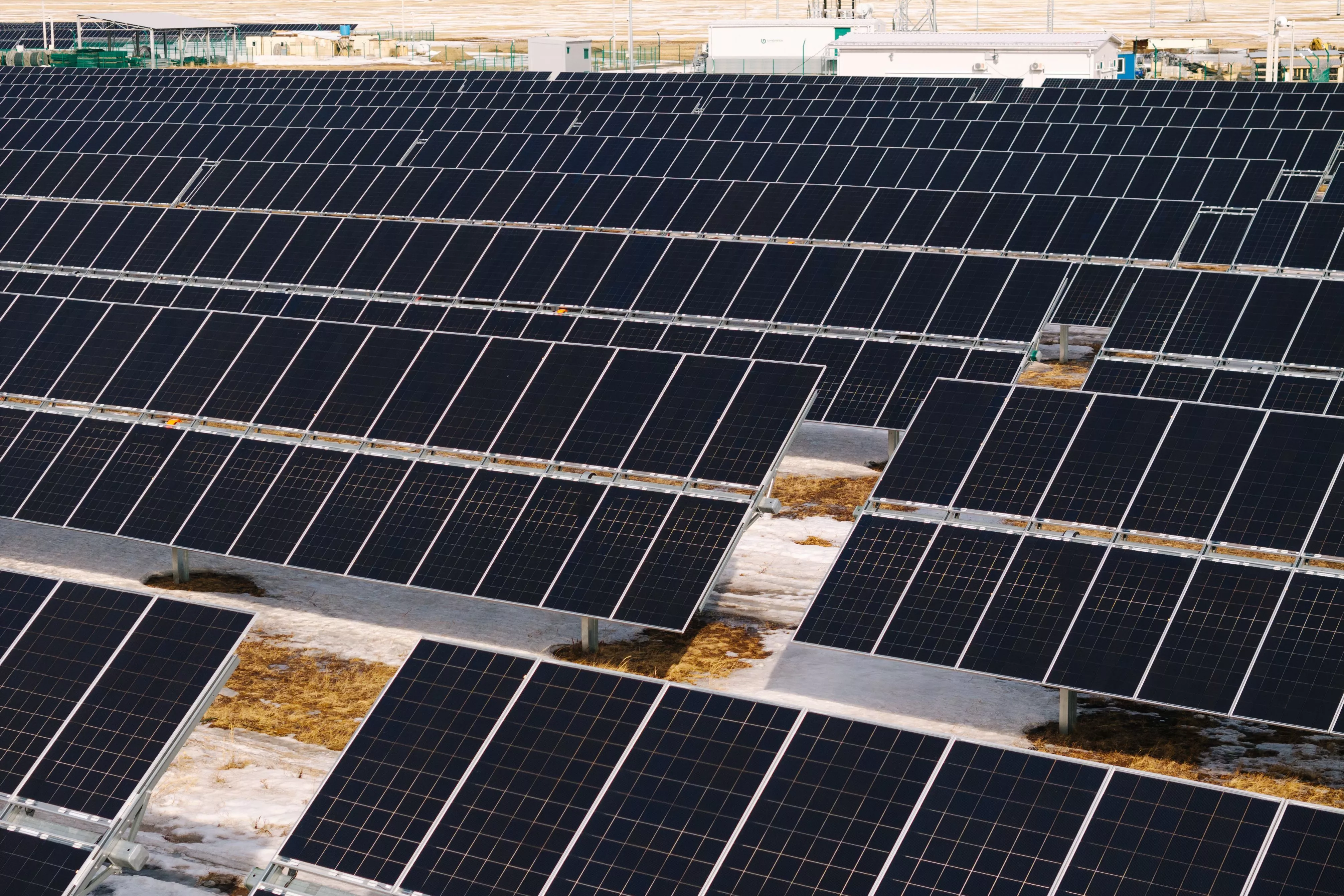
This is exactly the problem that a solar panel tracker eliminates — a sun-tracking system that turns the modules to follow the sun's rays. Today, tracker systems are the standard for industrial and utility-scale solar power plants.
What is a solar tracker?
A solar tracker is a comprehensive electromechanical system that ensures a constant perpendicular orientation of photovoltaic modules relative to the sun's rays. The tilt angle and rotation of the structure change automatically — without human intervention, in real time.
The uniqueness of the system lies in its "intelligence." It is an autonomous complex with light sensors, GPS modules, microcontrollers, and motors that independently track the path of the sun's rays and adapt to changing conditions.
What elements does a sun-tracking device consist of?
Controller — the central "brain" of the system. It receives data from sensors and GPS, calculates the optimal tilt angle and orientation of the modules, and sends commands to the actuators. It operates using astronomical algorithms and makes precise adjustments based on real-time light intensity readings.
Actuators — electromechanical devices that directly perform the rotation of the structure. They can be linear (translational movement) or rotary (rotation). The reliability and lifespan of the entire system depend on the quality of the actuator.
Light sensors — record the intensity of solar radiation from different directions. Based on them, the controller determines the current position of the sun and adjusts the orientation of the panels.
GPS module — allows the system to accurately calculate the sun's trajectory based on the geographical location of the station, the season, and the time of day. This is critical in cloudy weather when light sensors cannot "see" the radiation source.
Support structure — a metal frame that holds the photovoltaic modules and ensures their rotation. For ground-mounted stations, the support is mounted on piles or a foundation. The structure must withstand wind loads, taking into account the dynamic position of the panels.
Weather station — a separate element found on every modern solar power plant equipped with a tracker system. When the wind increases beyond the permissible threshold, the modules are automatically shifted to a "storm" position: they become parallel to the ground with a zero-degree tilt angle. Minimal drag ensures the structure can withstand extreme wind loads.
How does automatic sun tracking work?
The system continuously operates in two modes simultaneously.
- Astronomical (program) mode. The controller calculates the position of the sun in the sky based on the station's coordinates, date, and time. This ensures the correct orientation of the modules even in cloudy weather — when the sensors do not record direct radiation, the algorithm knows where the sun should be and keeps the panels in the right position.
- Sensor mode. Light sensors compare the intensity of insolation from several directions. If it is higher on one side, the controller commands the actuator to turn the structure. The response cycle is near-instantaneous: the sensor detects a deviation the adjustment, the actuator corrects the tilt angle, and the orientation becomes optimal.
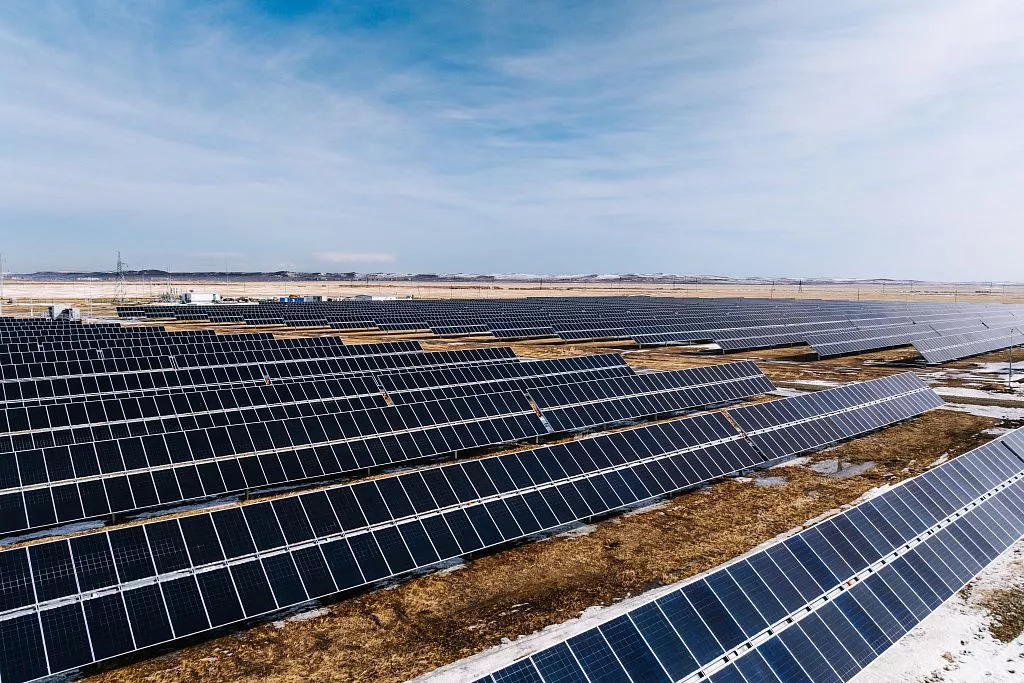
You can see how this looks in action at a real solar power plant in the video from the Borzinskaya solar power plant.
Types of trackers:Single-Axis (he Industry Standard
Rotation occurs around one horizontal axis — from east to west, following the daily movement of the sun. The design is simpler, more reliable, and cheaper to maintain. It is single-axis trackers that are used at utility-scale and industrial solar power plants, as they offer the optimal balance of generation increase, cost, and operating expenses.
Dual-axis — maximum precision
The system tracks the movement of the sun along two axes simultaneously: horizontal (daily movement) and vertical (seasonal changes in height above the horizon — higher in summer, lower in winter). Theoretically, dual-axis trackers provide slightly higher generation, but the design is more complex and expensive, and maintenance is more extensive.
By actuator type
Electromechanical actuators are the most common solution for industrial generation: they are precise, reliable, and easily automated. Hydraulic ones are used where smooth rotation under high wind loads is required. Passive ones (based on the thermal expansion of gas) do not require electricity but are less precise and are used in small installations.
What advantages a solar tracker provides — point by point
Generation grows up to 25%
The main argument in favor of a tracker system is the numbers. The constant perpendicular orientation of photovoltaic modules relative to the sun's rays increases electricity generation by an average of 20–25% compared to fixed installations.
Longer daylight hours
A fixed panel works effectively only when the sun is close to being perpendicular to its surface — a few hours a day. The tracker "captures" the rays from the very sunrise and maintains the optimal tilt angle until sunset. Daily generation grows not only due to peak hours but also due to morning and evening hours, which are virtually lost with a fixed installation.
Seasonal adaptation
The sun's angle of inclination to the horizon changes throughout the year: it stands high in summer and low in winter. Dual-axis trackers compensate for this automatically. Single-axis systems combined with an astronomical controller also take into account seasonal changes in the sun's trajectory, maintaining optimal orientation without manual adjustment.
Fewer panels for the same capacity
Tracker systems require a larger area for installation and the movement of structures; however, due to the increased efficiency of each module, fewer panels may be needed to achieve the required installed capacity. This indirectly affects land use and reduces specific equipment costs.
Smart automation
Everything works autonomously. This eliminates the human factor and ensures constant optimization under any conditions.
Hurricane protection
Every solar power plant with a tracker system is equipped with a weather station. If the permissible wind speed is exceeded, the controller automatically moves the modules to a horizontal position with a zero tilt angle. Drag is minimal. The structure withstands the storm, after which the system independently returns to operating mode.
Applications of solar panel trackers
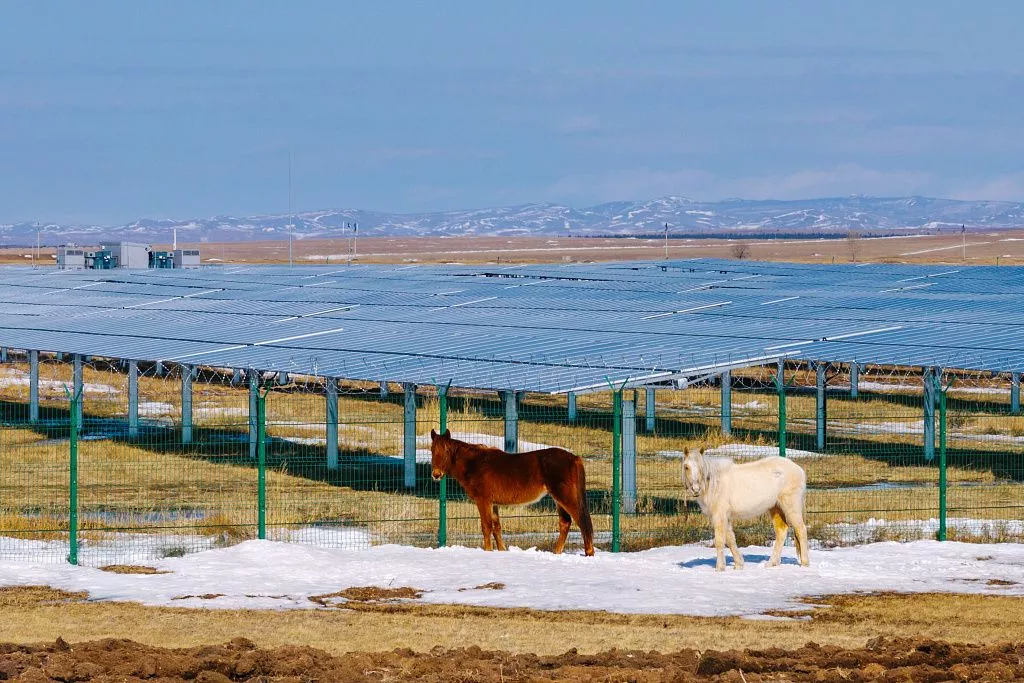
- Utility-scale power plants — the main area of application. Here, trackers unlock their potential fully: large areas, industrial volumes of generation, and a direct dependence of income on every kilowatt-hour.
- Industrial generation — facilities that provide electricity to manufacturing enterprises. A more stable and flatter daily generation profile better matches the uniform consumption of production during the working day.
- Agrivoltaics — combining solar generation and agricultural use of land. Trackers allow for dynamic management of crop shading during hot hours, reducing moisture evaporation.
- Scientific and meteorological stations — facilities requiring precise positioning of equipment relative to the sun.
And when should a tracker be used, and when not?
A tracker is justified if:
- the facility is ground-mounted with sufficient space for the movement of structures
- the station is industrial or utility-scale, where generation directly affects the economics of the project
- the region has a high level of direct insolation
- the project is designed for a long operating life — 20–25 years, during which the additional generation pays off the investment in the tracker system many times over
Fixed installation is preferred if:
- the facility is rooftop-mounted with limited space
- the project budget is strictly limited
- the region has predominantly diffuse insolation (heavy cloud cover most of the year), which reduces the tracker's advantage
- the installation capacity is small, meaning the costs of tracker mechanics do not pay off
Frequently Asked Questions
Solar panels with a tracker or without — which is better?
For ground-mounted industrial and utility-scale solar power plants — with a tracker. For small rooftop installations, a fixed mount is simpler, cheaper, and quite sufficient.
By how much does electricity generation increase?
By an average of 20–25% compared to a similar installation with a fixed tilt angle. The exact figure depends on the geography of the facility, the type of tracker, and the climatic conditions of the region.
Do trackers work in winter?
Yes. The astronomical controller calculates the position of the sun by date and coordinates. In winter, the tracker maintains the corresponding tilt angle of the modules and continues to maximize the collection of available radiation.
Can a tracker be installed on an existing station?
Technically — yes, but economically it is rarely justified. A tracker system requires redesigning the support structures, laying power and signal cables, and installing controllers and a weather station. Retrofitting an existing fixed solar power plant for tracker mounting is comparable in cost to new construction. At Unigreen Energy, trackers are designed as part of the station from the very beginning.
Is maintenance required?
Yes, scheduled maintenance: checking and lubricating the mechanical components of the actuator, diagnosing controllers and sensors, and checking structural fasteners.
Director of the Sales Department of the Russian Federation and the CIS